


Joyful movement isn’t about staying in your comfort zone, but it’s also not about pushing yourself into pain. For a lot of people, especially those who’ve been taught that exercise only “counts” if it hurts, this can feel confusing.
How do you know if you’re doing enough without doing too much?
How do you challenge yourself while still respecting your body?
This is where finding your sweet spot comes in: that place where movement feels challenging, empowering, and sustainable – not punishing.
Here’s how I guide clients toward joyful movement that supports strength, confidence, and long-term consistency, without burnout or injury.
understand the difference between discomfort and pain

This is the foundation of joyful movement and safe progress.
Discomfort is a normal part of strength-building and cardiovascular work. It might feel like:
- Muscles working hard or burning
- Heavier breathing or an elevated heart rate
- Shaking, fatigue, or effort
- A sense of “this is challenging, but I could keep going a little longer”
Discomfort is your body adapting to stress (this is where growth happens).
Pain, on the other hand, is not part of joyful movement. It often feels like:
- Sharp, stabbing, or pinching sensations
- Joint pain (knees, hips, shoulders, back)
- Numbness, tingling, or a loss of control
- A feeling of “something is wrong”
Pain is a stop sign.
Ignoring it doesn’t build strength; it increases injury risk and breaks trust with your body.
use the “comfortable + one more step” rule
Joyful movement isn’t about going from zero to maximum effort. It’s about small, intentional progress.
If something feels comfortable and manageable, try adding one small challenge:
- If 10 bodyweight squats feel solid → add a light weight (for example, 15–20 lbs)
- If you can hold a plank for 20 seconds → try 30 seconds
- If a yoga pose feels stable → slow the movement or extend the hold
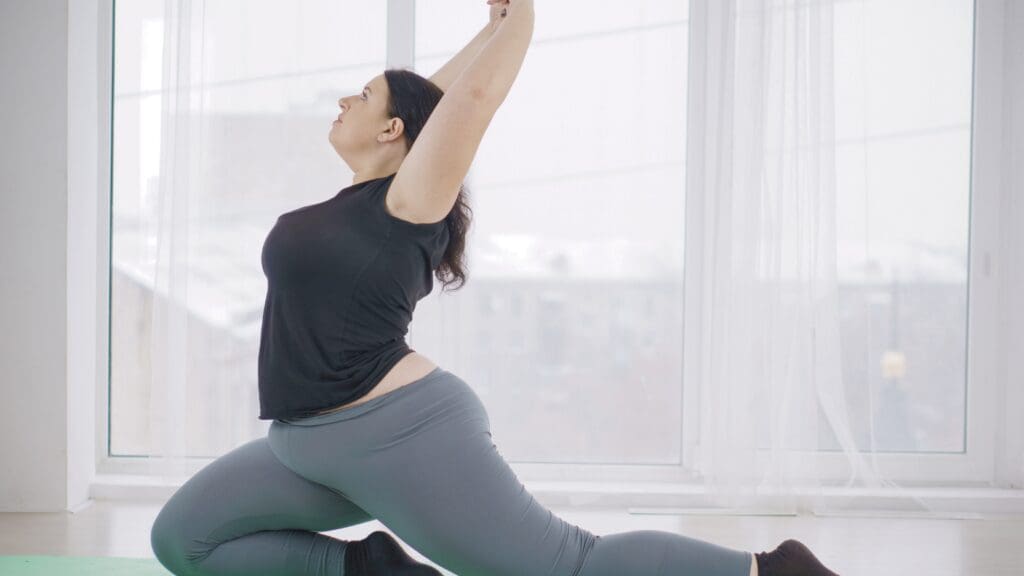
This approach keeps movement challenging without tipping into overwhelm or pain. You’re stretching your limits – not breaking them.
ask yourself better questions during movement

Many people check in with themselves by asking:
- “Is this hard enough?”
- “Am I doing enough to make this count?”
These questions often come from diet culture and fitness guilt, not from body awareness.
Instead, try asking:
- Can I maintain good form here?
- Do I feel challenged but still in control?
- Could I do one or two more reps if I absolutely needed to?
If the answer is yes, you’re likely in your sweet spot for joyful movement. If the answer is no, that’s information – not failure. Scale it back.
remember: progress is not linear

One of the biggest myths in fitness is that progress should look the same every day, or that effort must always increase.
In reality, your capacity for joyful movement is affected by:
- Sleep
- Stress
- Hormones
- Nutrition
- Mental and emotional load
Some days your body wants more. Some days it wants less.
Choosing a lighter option doesn’t mean you’re quitting – it means you’re listening.
Choosing a heavier option doesn’t mean you’re proving anything – it means you’re allowing growth.
Both are valid. Both belong in a sustainable movement practice.
let our trainers support you
Joyful movement doesn’t mean doing everything alone.
At Body Positive Fitness, our trainers are always paying attention to:
- Form and alignment
- Energy levels
- Confidence and comfort
- Recovery between sets
If something feels too easy, too hard, confusing, or uncomfortable – tell us. That communication helps us adjust your movement so it stays safe, effective, and empowering.
joyful movement is about trust
Joyful movement isn’t about avoiding challenge. It’s about trusting your body enough to challenge it safely.
Strength doesn’t come from suffering.
It comes from showing up consistently, listening to your body, and testing your limits in ways that are uncomfortable – but not harmful.
The next time you move, ask yourself:
Am I in the zone where I can grow without hurting myself?
That’s where the magic of joyful movement happens.
Want to learn more about joyful movement? Book a free consultation today.
Jenna Doak
January 16, 2026


